Project
The project New Exorcist consists of a two-channel film at its core, an image installation named Ji Star Petri Dish closely tied to artifacts(ca. 111 BCE–2nd century CE), and several sculptural works with chemicals.
New Exorcist unfolds through two interwoven trajectories, exploring windblown sand, photosensitive particles, materially oriented archaeological perspectives, and the translation of artifacts across different epistemic systems.
At the center of the project is Pazuzu — the wind demon from ancient Mesopotamian mythology, associated with plague and drought, yet also revered as a protective deity. Pazuzu appears as a museum artifact, an amulet, a cinematic character, and a toy-like figure (Labubu) circulating within popular culture.
Click here to listen to the film score created in collaboration with the artist and musician.
New Exorcist
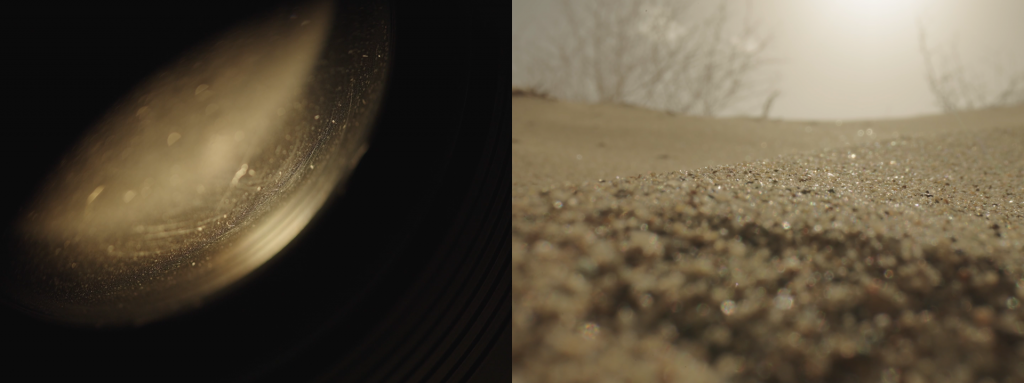
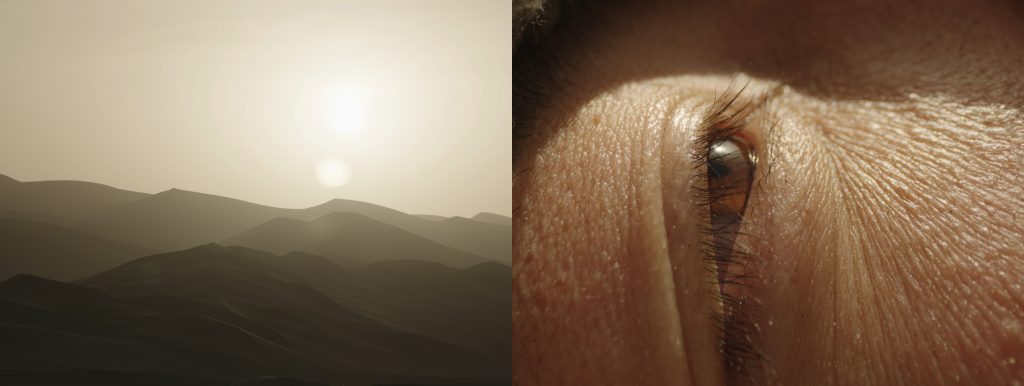
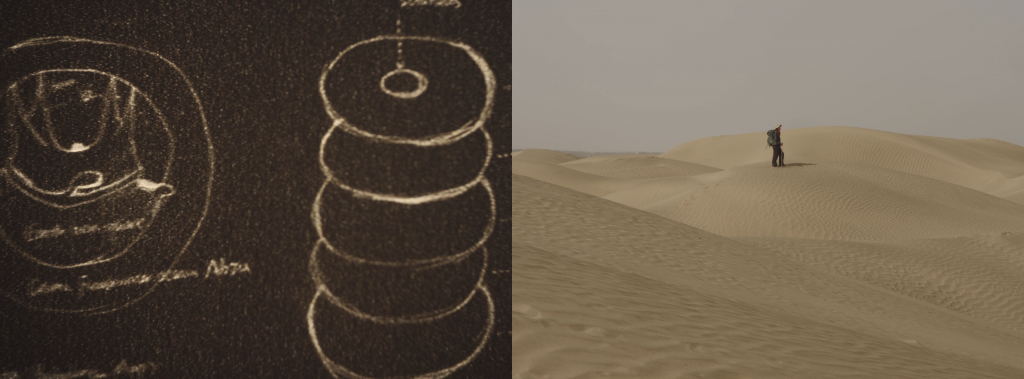
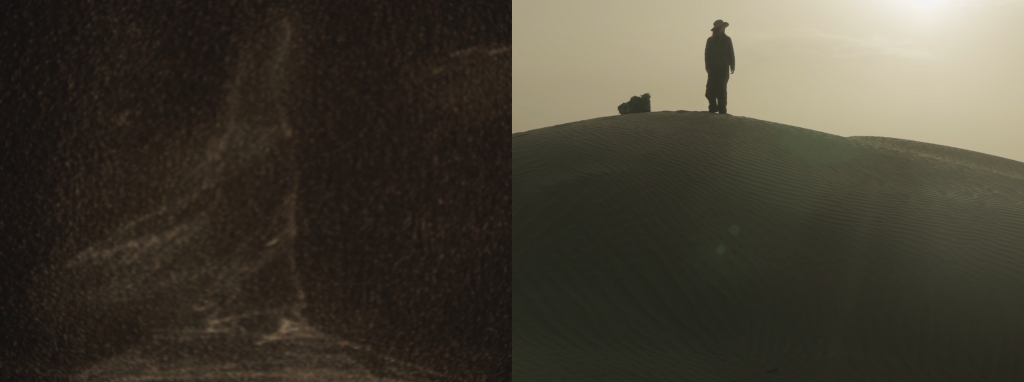
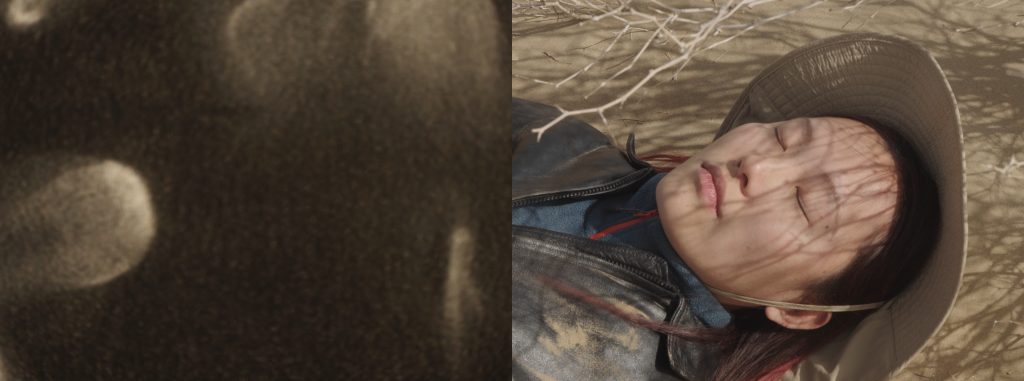
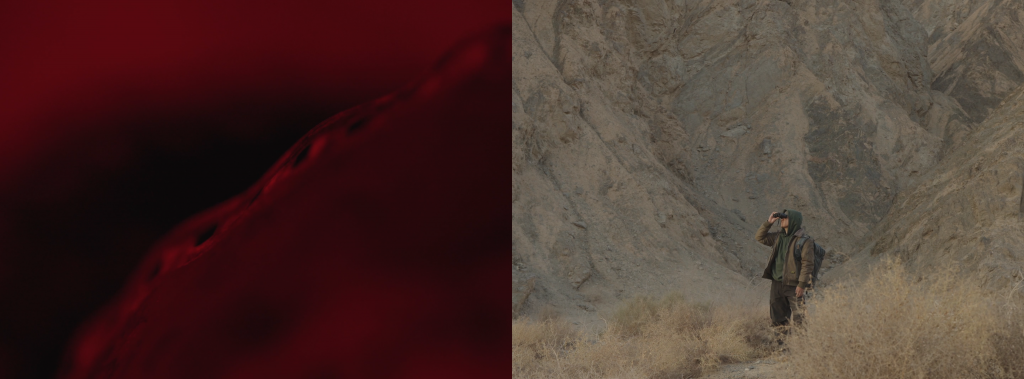
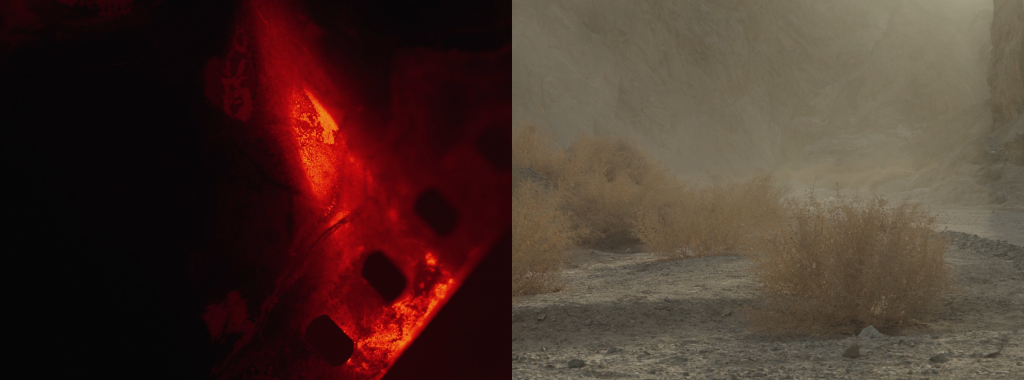
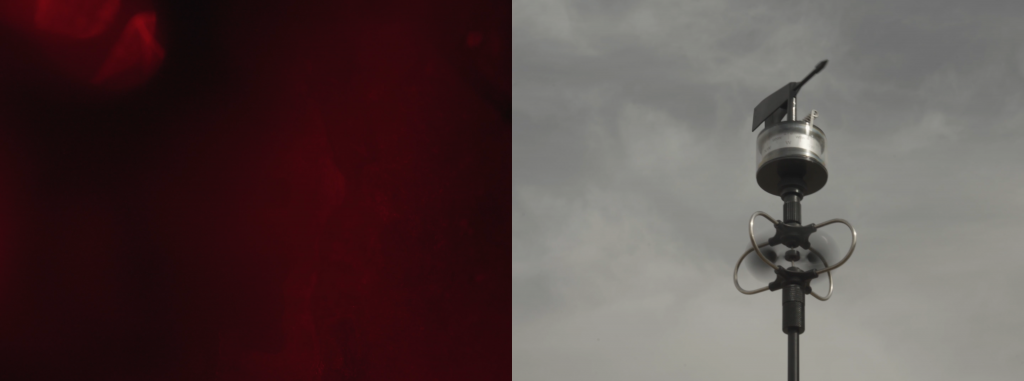
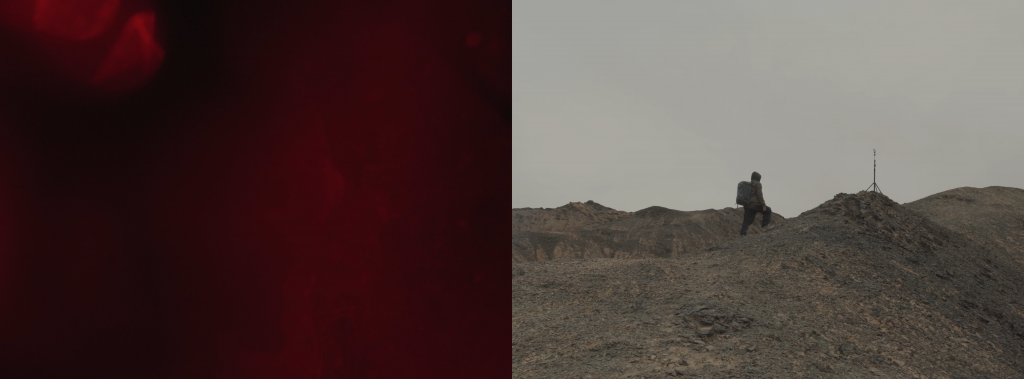
The film New Exorcist constructs a speculative narrative in which the image of “Pazuzu” is no longer regarded as a historical object circulating through time, but as a contemporary climatic condition — an atmospheric process that traverses the arid regions of Asia, an unstable force, resistant to capture and containment.Human encounters with it point toward the instability involved in naming, marking, or detecting wind-sand environments and the historical structures entangled within them.
Continuing Zhang’s long-term investigation into the displacement of cultural objects, the project examines how artifacts and their meanings are produced within constantly shifting contexts and media systems, while simultaneously imagining the failure of “exorcism” as an institutional operation.
项目介绍
“箕风,或于尘埃“项目由一部双屏影像作为其主线,连接着一座与真实文物紧密关照的图像装置和数件雕塑。
这个项目从两个相互交织的路径展开——以风沙、感光颗粒、和物质为导向的考古路径以及文物在不同视觉媒介之间的转译的路径。项目围绕的核心是帕祖祖(Pazuzu)——来自古代美索不达米亚神话的风魔,它带来瘟疫和干旱,又被尊为守护神。它是博物馆的文物,护身符,电影角色,是流行文化中的玩偶化身。
Dust Petri Dish
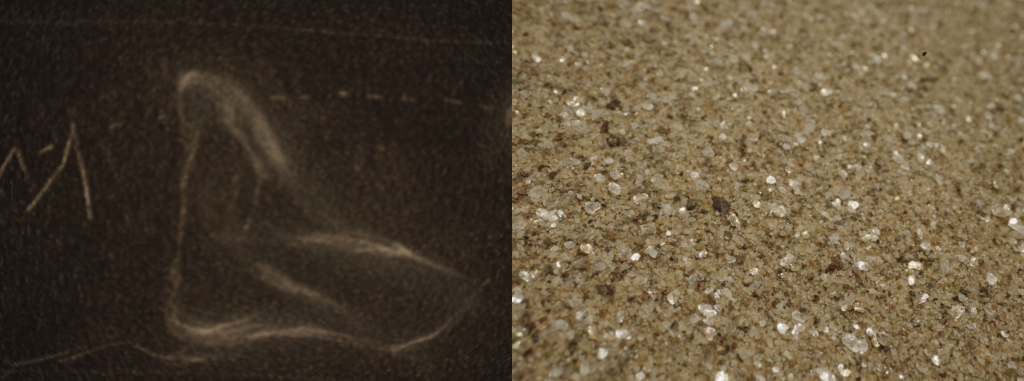
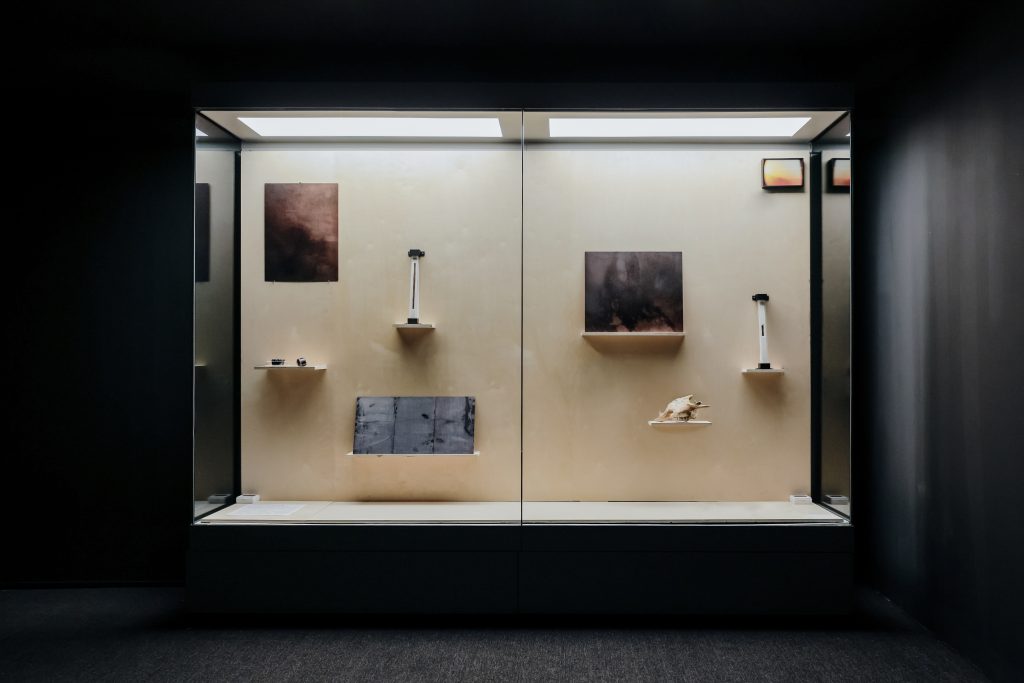
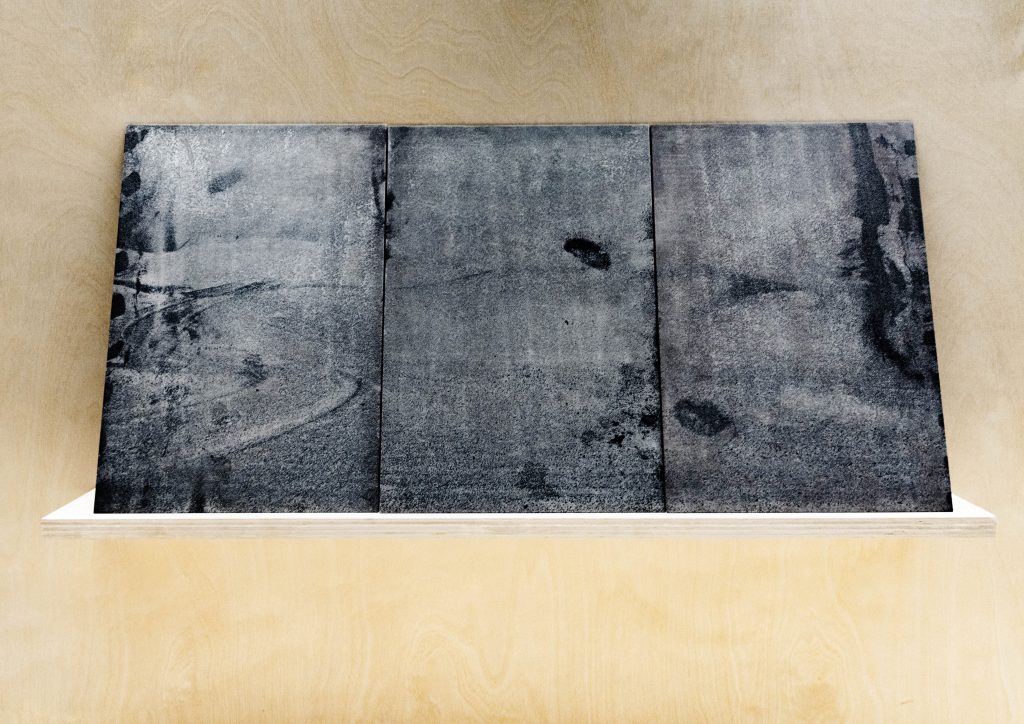
Composed of protective glazing, a custom wooden casework structure, and a climate-control system, this vitrine is conceived as an incubation chamber for particles, thermal energies, and historical residues. It brings into proximity two museum artefacts—wooden administrative slips dating to approximately the second century CE, together with a series of experiments conducted by the artist within the climatic regime of “Pazuzu”—wooden administrative slips dating to approximately the second century CE, together with a series of experiments conducted by the artist within the climatic regime of “Pazuzu”, allowing them to undergo a process of co-incubation.
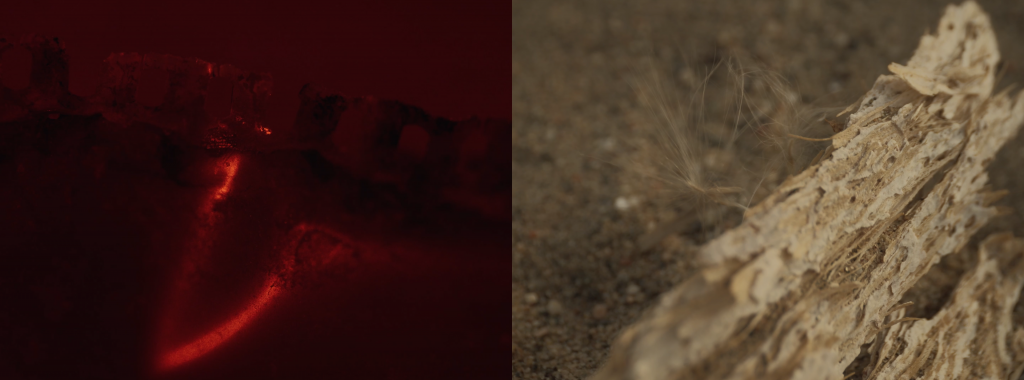
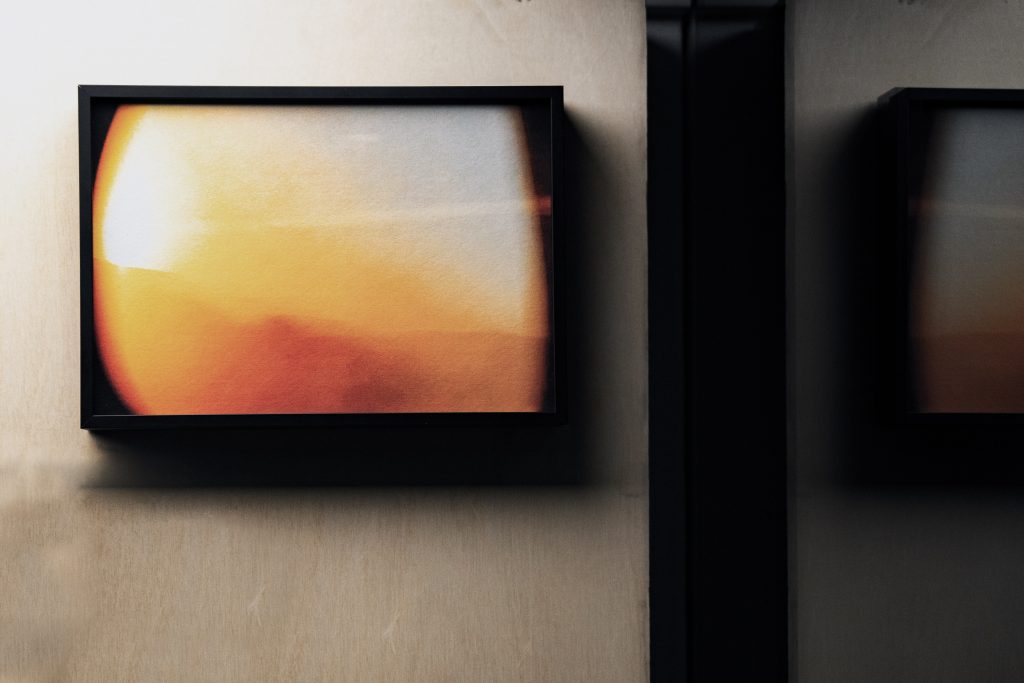
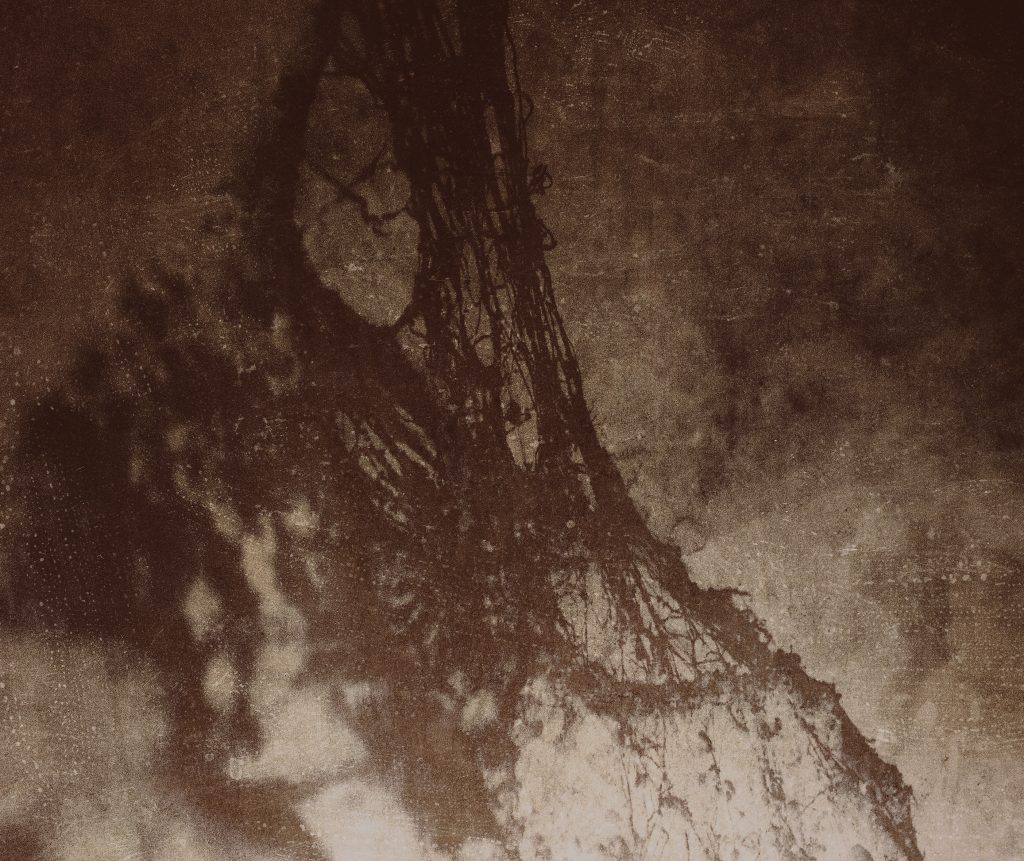
The left section points toward heat, mythology, and the lingering thermal residue of history. The artist entered “Pazuzu” and, from within its belly, unexpectedly came upon a roll of photographic film apparently scorched by its presence. Through a series of chemical etching and heat-treatment processes, the artist attempts to reconstruct the landscapes recorded prior to the film’s contamination by Pazuzu, tracing the unstable boundary between inscription, deterioration, and apparition.
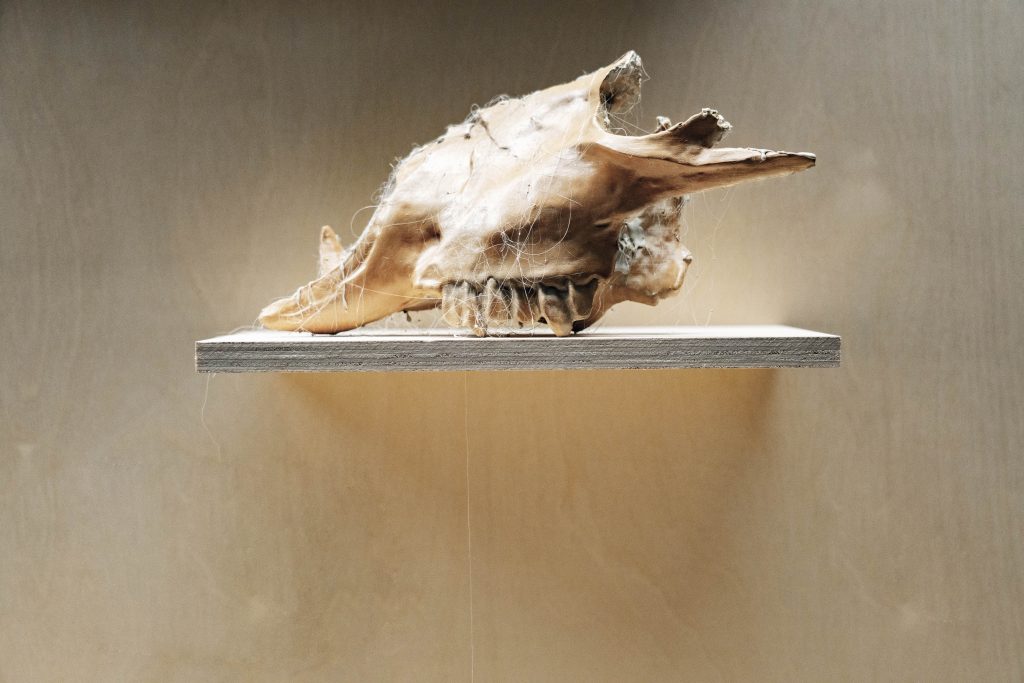
The right section examines the tension between duration, ritual agency, and museological objectification. Under the climatic conditions associated with “Pazuzu,” the artist interred a sheep skull in the Gobi Desert as an offering. Subjected to prolonged solar exposure, fungal mycelium colonised the bone surface. The materials presented here retrace the subsequent conservation trajectory of the object—from excavation, degreasing, stabilisation, and digitisation to its eventual incorporation into an exhibitionary framework—following its transformation from a buried object into a museological signifier.
About title
The English title of the work adopts a deliberately ironic tone of pop culture. “The Exorcist” alludes to Pazuzu’s contradictory dual role as both protective amulet and demon, while also referencing the film that transformed it into a figure of popular culture. And, the title projects a speculative question toward the future: has “ New exorcism” — the rational or scientific attempt to unveil and regulate the spiritual world of artifacts through material research — itself mutated into a contemporary pathology?
Meanwhile, the Chinese title points more directly toward the cultural relics and historical imaginaries embedded within this climatic zone. In the northwestern regions of China—lands once linked to East Asia, Central Asia, and the territories of present-day Iraq and Iran—numerous ancient star charts have been unearthed. Within these records, the brightness of the Ji Star was read as a sign of approaching winds. As heaven and earth drift out of alignment and the stars slowly change their course, the Ji Star we observe today may itself one day dissolve into dust.
This project was made possible through the generous support of Asymmetry, London, UK.
The artist residency was generously supported by the Dunhuang Contemporary Art Museum
点击此处您可以收听艺术家与音乐人合作的电影音乐
箕风,或于尘埃
箕风,或于尘埃构建出一个推测性的叙事,“帕祖祖”不再被视为一个流转的历史客体,而是一种当下的自然气候——一种跨越亚洲干旱地带、不断聚集、流动与变化的大气过程。人类与它的接触,指向了命名、标记或探测风沙环境与其相关历史结构的不稳定。张延续其对文化对象流离失所的长期研究,探讨文物和其意义如何在不断变化的语境和媒介体系中产生,同时畅想了“驱魔”作为一种制度性运作的是失败。
尘埃培养皿
由防护玻璃,木板柜体与恒温系统组成的展柜被视为一个由颗粒,热量与历史颗粒组成的培养皿。该培养皿系尝试将两块博物馆中的文物——两块约公元前111年至公元后2世纪初的“帕祖祖”气候中出土的简牍与艺术家于沙漠中展开的实验共同进行孵化。
培养皿的左侧部分指向热力、神话以及历史残留的热能痕迹。艺术家进入“帕祖祖”内部,意外地在其腹地发现了一卷似乎被其灼烧过的胶卷。通过一系列化学蚀刻和热处理工艺,艺术家试图重构胶卷被“帕祖祖”附着之前所记录的景观,追溯铭刻、损毁和显现之间那条不稳定的界限。
其右侧指向“时间”“仪式性生命”与“博物馆式物化”之间的张力。在“帕祖祖”气候中,艺术家将一个羊头骨埋葬在了戈壁中(作为一种贡献祭品式的行为),随着太阳的运动,羊骨生长出了菌丝,此处呈现的材料,回溯了这一行为的结果——从掘出,脱脂,防腐到扫描从“地中之物”到“柜中语义”的演化。
关于标题
这部作品的英文标题刻意采用了流行文化的讽刺语气。“驱魔人”既指帕祖祖作为护身符和恶魔的矛盾双重角色,也指代了将其塑造成流行文化形象的电影。此外,标题还向未来抛出了一个引人深思的问题:“新驱魔”——执着于通过物质研究来揭示和调节文物精神世界的理性或科学尝试——本身是否已经演变成一种当代病态?
与此同时,中文标题则更直接地指向对这一气候带所蕴含的文化遗迹和历史想象的思考。今天,在中国西北连接着东亚、中亚以及伊拉克和伊朗地区的土地上,出土了诸多古代星图,明亮的箕星被视为强风的预兆。斗转星移,我们视线中的箕星或许也会化为一粒尘埃?
艺术家驻地项目由敦煌当代美术馆支持。
New Exorcist Trailer 2026
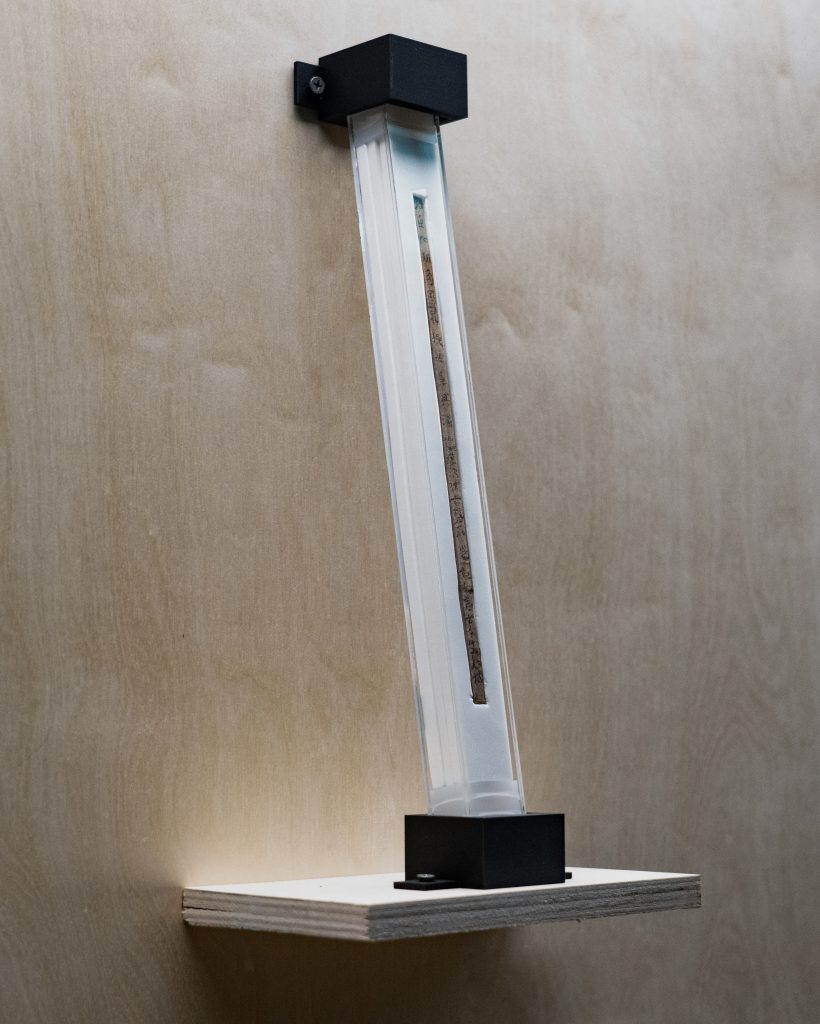
Xuanquan Han Slip: “Xuanquan Is a Place of Strong Winds”
Date: ca. 111 BCE–2nd century CE
Material: Wood
Dimensions: 23.7 × 0.8 × 0.2 cm
Excavated from: Xuanquan Relay Station Site, Dunhuang, Gansu, China
Collection: Gansu Jiandu Museum
Excavated in 1990 from the Xuanquan Relay Station Site in Dunhuang.
The phrase “Xuanquan is a place of strong winds” (縣泉地埶多風) describes the local climatic conditions of the region.
Transcription: 縣泉地埶多風塗立乾操毋憂其濕也度得榬六枚今遣效穀倉曹令史張博
Translation:At Xuanquan, strong winds prevail. Coatings dry rapidly after application, and dampness poses no significant concern. An estimated six timber pieces have been secured, and Clerk Zhang Bo of the Xiaogu Granary Office has been dispatched accordingly.
悬泉汉简:“悬泉地热多风”简,
年代:约公元前111年至公元后2世纪初
材质:木
尺寸:23.7×0.8×0.2cm
出土地:敦煌悬泉置遗址 馆藏:甘肃简牍博物馆
1990年出土于敦煌悬泉置遗址。
释文:简文中“悬泉地热多风”是对当地干燥气候特点的描述
原文:縣泉地埶多風塗立乾操毋憂其濕也度得榬六枚今遣效穀倉曹令史張博
web-768x1024.jpg)
Click here to watch: Behind the Scenes of ‘Beichen Zhang: New Exorcist’with Zhejun Gao
Watch the interview with Zhejun Gao, Asymmetry Curatorial Research Fellow at Chisenhale Gallery, discussing the research and ideas behind New Exorcist, his fellowship research project in close collaboration with Chinese artist Beichen Zhang.
The project considers the displacement and restitution of artefacts, examining how cultural objects and figures move across different contexts, and how modes of display, narration, and reproduction shape the meanings they carry.
您可以点击观看,张北辰:《新驱魔人》幕后访谈——与高哲君对谈
高哲君为 2025 年 Asymmetry Curatorial Research Fellow,并担任英国伦敦奇森黑尔美术馆(Chisenhale Gallery)策展研究 Fellow。访谈围绕《新驱魔人》(New Exorcist)的研究脉络与创作思考展开。
该访谈属于高哲君驻留研究计划的一部分,项目在与中国艺术家张北辰的密切合作中展开。研究聚焦于文物的迁移与归还问题,考察文化对象与形象如何在不同语境之间流动,以及展示、叙述与复制等机制如何持续塑造它们所承载的意义。
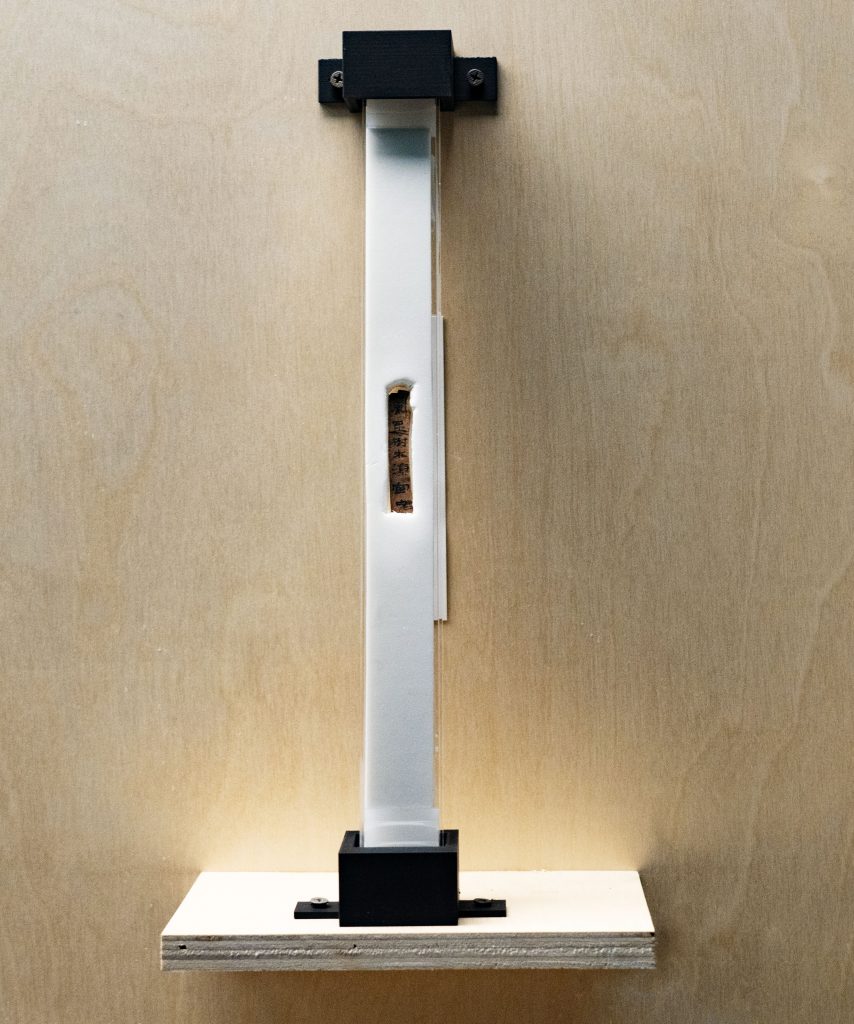
Jianshui Jinguan Han Slip: “As the Autumn Wind Arrives, the Trees Grow Cool”
Date: ca. 111 BCE–2nd century CE
Material: Wood
Dimensions: 6.6 × 1.1 × 0.2 cm
Excavated from: Jianshui Jinguan Site, Gansu, China. Collection: Gansu Jiandu Museum
The inscription may preserve a fragment of a lost poetic composition, or a surviving line from a poem composed by a frontier soldier stationed in the borderlands.
Transcription:秋風至樹木凉宦老
Translation: The autumn wind arrives, the trees turn cool, and the man in service grows old.
肩水金关汉简:“秋风至树木凉”简
年代:约公元前111年至公元后2世纪初
材质:木
尺寸:6.6×1.1×0.2cm
出土地:肩水金关遗址 馆藏:甘肃简牍博物馆
释文:可能为佚失诗赋的残句,或是边塞士卒所作诗赋残句。
原文:秋風至樹木凉宦老
\